Exchange · DeFi · Featured case
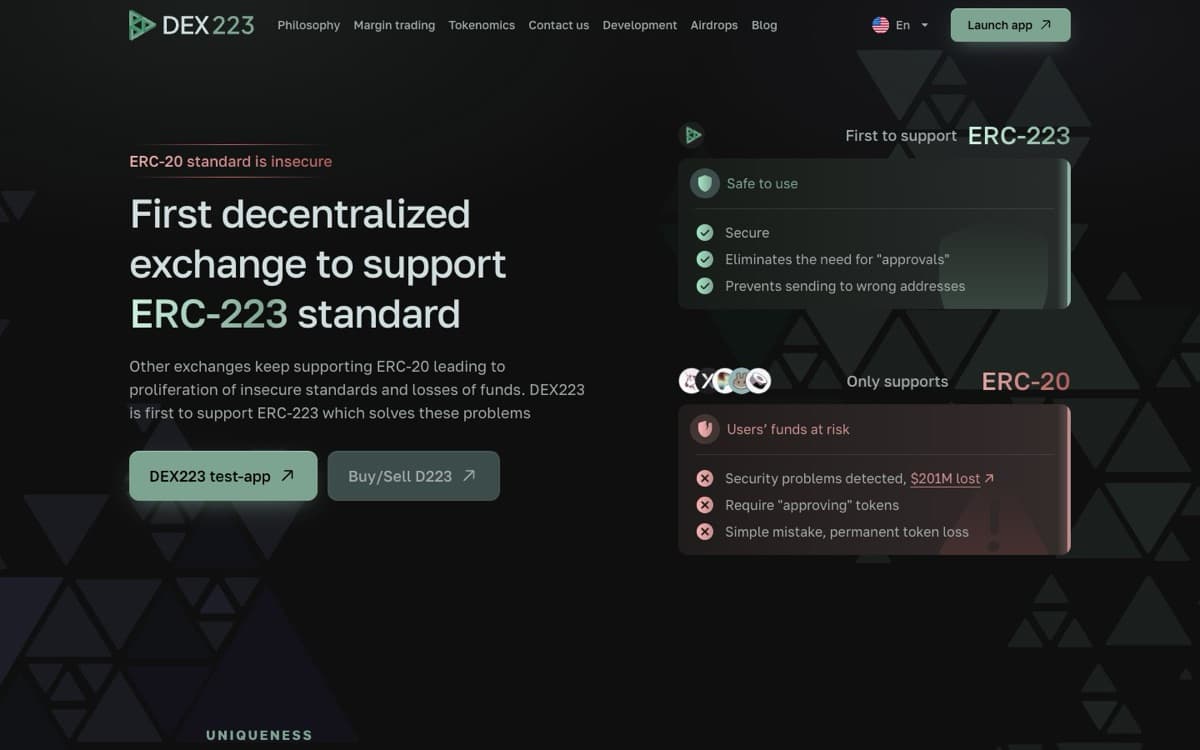
Dex223.io case study
A decentralized exchange platform built around a safer token standard and broader EVM compatibility, covering DeFi architecture, trading systems thinking, and smart-contract-aware product design.
Shipped
Available for new projects
Built by engineers who ship. Designed to work at scale.
Every platform we build is designed for production from the first commit: tested, observable and owned by you.
We focus on four core system layers: blockchain infrastructure, decentralized applications, distributed backend systems, and enterprise web platforms. That combination matters because modern platforms rarely exist in isolation. A serious product may need smart contracts, backend APIs, indexers, data pipelines, cloud infrastructure, user management, observability, and a frontend that keeps the complexity hidden from end users. Our team is structured around engineering problems that require architecture, not just implementation. We help clients turn broad ideas into technical systems with clear boundaries, scalable components, and practical launch paths. In blockchain, that may mean node operations, staking systems, governance platforms, or DeFi interfaces. In enterprise software, it may mean portals, operational workflows, analytics, and secure web platforms. In both cases, the same principle applies: design the system properly so future growth does not break the product.
We support blockchain ecosystems with infrastructure engineering, node operations, validator or block producer support,...
Explore→We build dApps that combine smart contracts, backend services, wallet interactions, and product-grade frontend...
Explore→We design backend systems for scale. That includes event-driven architecture, queue-based processing, real-time data...
Explore→We build portals and business platforms for organizations that need secure workflows, user-facing interfaces,...
Explore→These case studies show how architecture decisions translate into real platforms across blockchain, distributed systems, and enterprise environments. Each example highlights how different product types require different technical approaches while maintaining the same engineering discipline. Some platforms are active in production, others are evolving, and some demonstrate specific architectural capabilities. Together, they show the range of systems our architecture can support.
Exchange · DeFi · Featured case
A decentralized exchange platform built around a safer token standard and broader EVM compatibility, covering DeFi architecture, trading systems thinking, and smart-contract-aware product design.
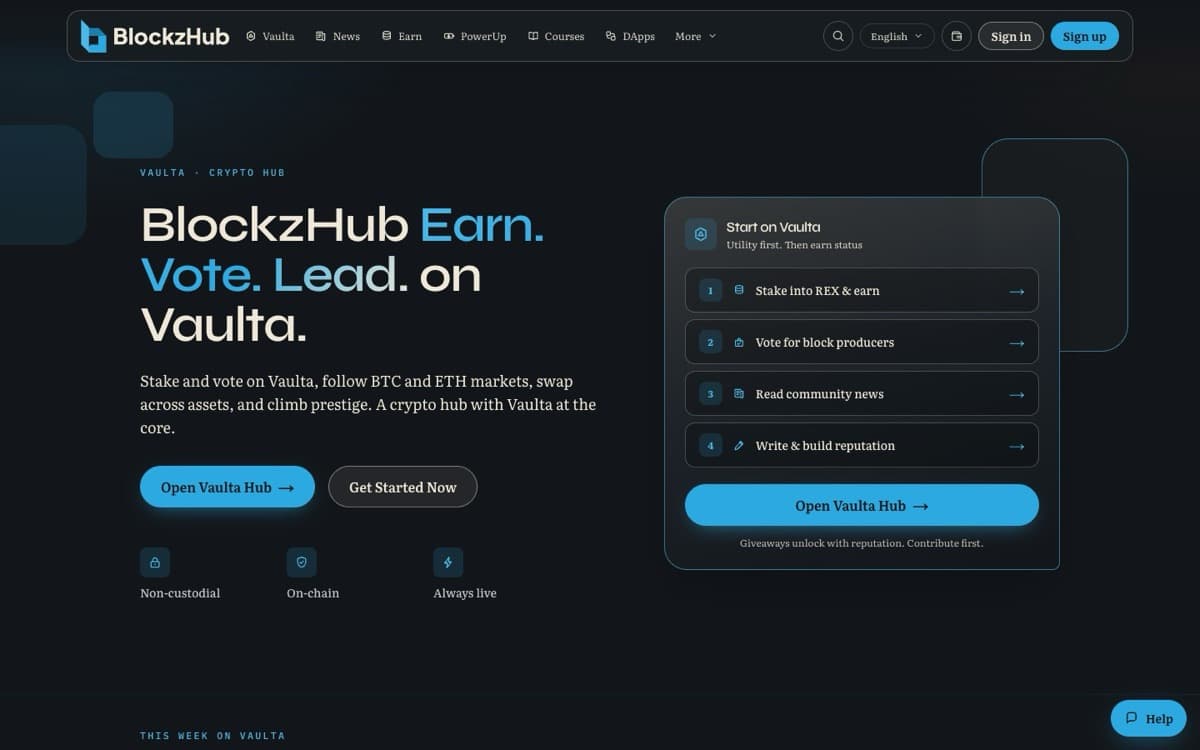
Web3 · CMS
A multi-service Web3 ecosystem hub that combines news content, (d)App discovery, courses, support, staking, swaps, community interaction, and…
Governance · DAO
A blockchain-based voting and consensus platform designed around fairer community decisions and DAO-style governance use cases, covering governance mechanics,…
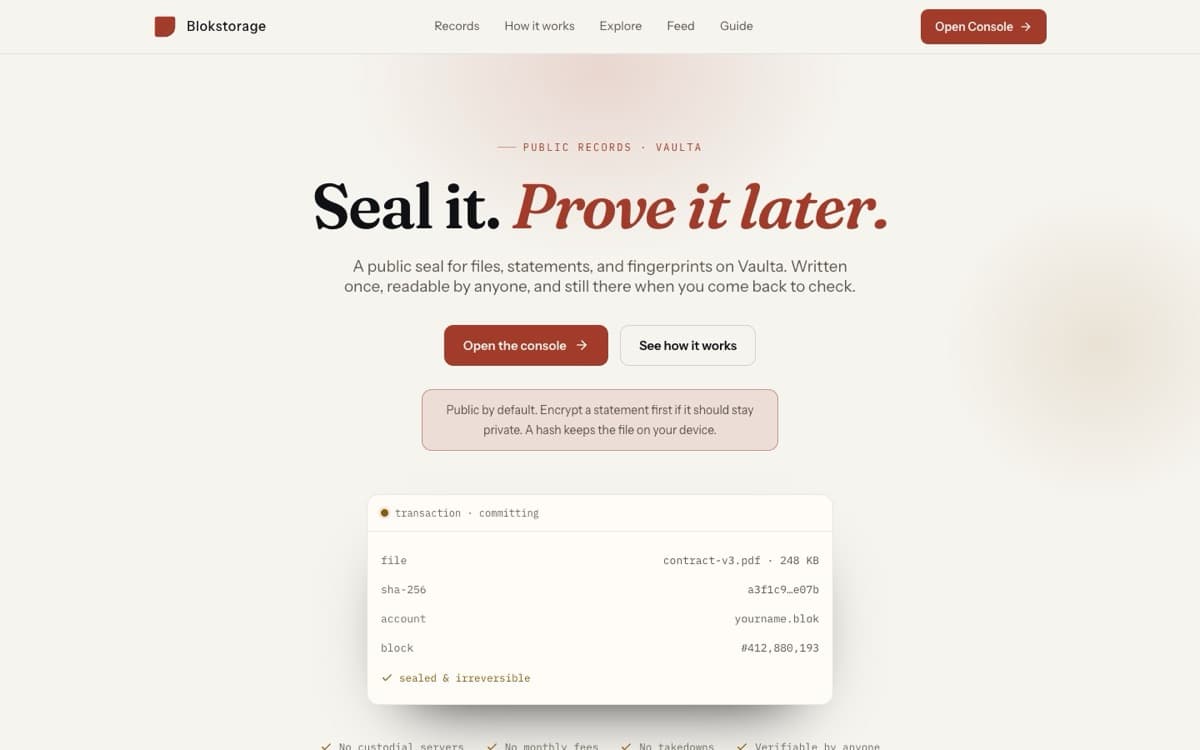
Storage · Verification
A verification platform that anchors a cryptographic fingerprint of text or a file to blockchain infrastructure in order to prove existence and integrity,…
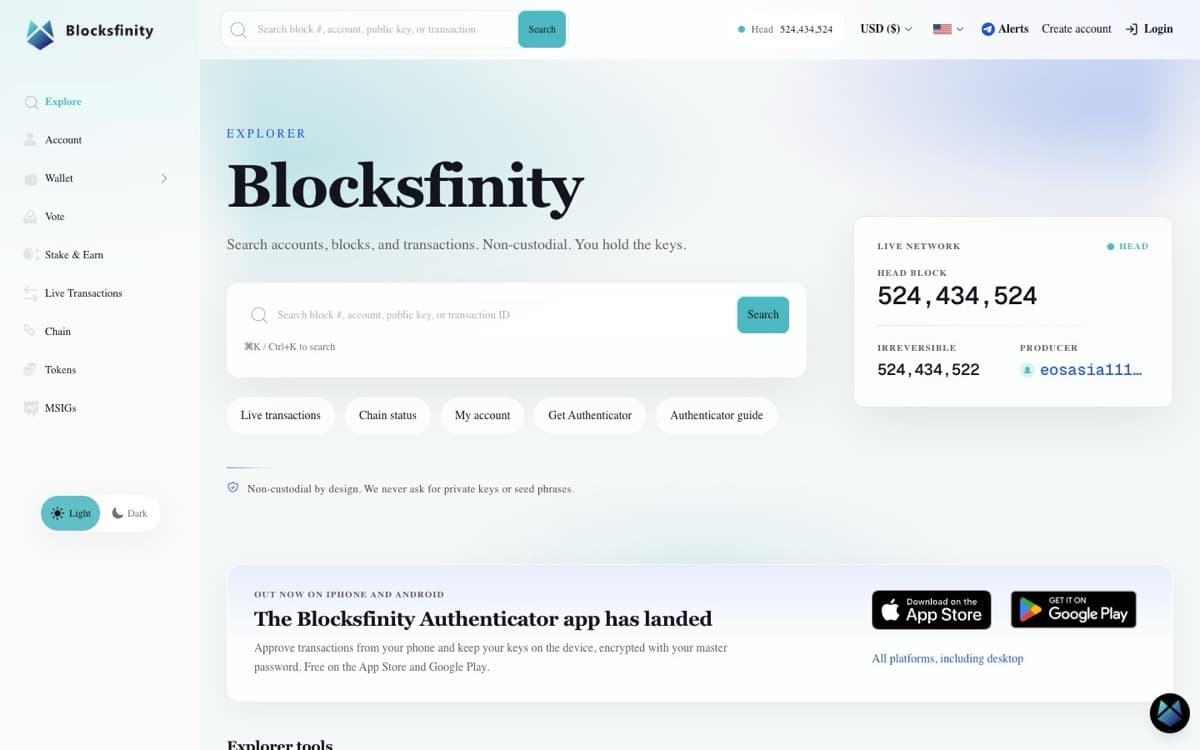
Blockchain Explorer
A blockchain explorer and data-platform direction that points toward visibility, analytics, and ecosystem tooling, covering ecosystem product thinking,…
Healthcare Platform
An enterprise web portal built for real operational use in healthcare, covering patient access, appointment scheduling, telemedicine, digital health records,…
Your project
Tell us what you are building. You will hear from an engineer, not a salesperson.
Start a projectThree stages. Start at any one of them, and know exactly what you get at each.
We read the code, the architecture and the deployment, then tell you plainly what is safe and what is not.
You receive
We design and ship the platform, or fix what the review found, on your repository with tests.
You receive
We deploy, monitor and maintain it so it keeps working after launch.
You receive
While the technologies vary, the underlying engineering challenges remain consistent: reliability, scalability, security, and maintainability. RORO Technology works across industries where software is not optional infrastructure but a core part of the business. Each industry introduces different constraints, but the architectural principles remain consistent.
Engineering quality is determined by architecture decisions made early in the process. RORO Technology follows an architecture-first approach that connects product requirements to system design, infrastructure constraints, and long-term maintainability. This model applies across blockchain, distributed systems, and enterprise platforms.
Learn more about our architecture-first model, core capabilities, technology stack, and development process in our engineering approach.
RORO Technology is built by a team of engineers, product thinkers, and operators who work directly on the systems we design and deliver. The team combines leadership across engineering, product, and commercial strategy with hands-on development experience across blockchain infrastructure, distributed systems, and enterprise platforms. Rather than separating strategy from implementation, our team works across both. That means the same people involved in shaping architecture decisions are also involved in building and evolving the platform. This reduces translation gaps and ensures that what is designed can actually be delivered and maintained in production.
Meet the team and learn what sets RORO Technology apart, how we operate, and who we work with on the About page.
The team includes software engineers, infrastructure specialists, product and commercial leadership, and design expertise — allowing us to support platforms from early definition through to production and scale. This structure is particularly important for products that span multiple layers, such as blockchain-integrated systems, data-driven platforms, or enterprise applications with operational complexity.
Clients work directly with the team responsible for architecture and implementation. This creates clearer communication, faster iteration, and better alignment between product goals and technical execution.
Explore our services, see our engineering approach, review case studies, understand the industries we serve, or learn more about us.