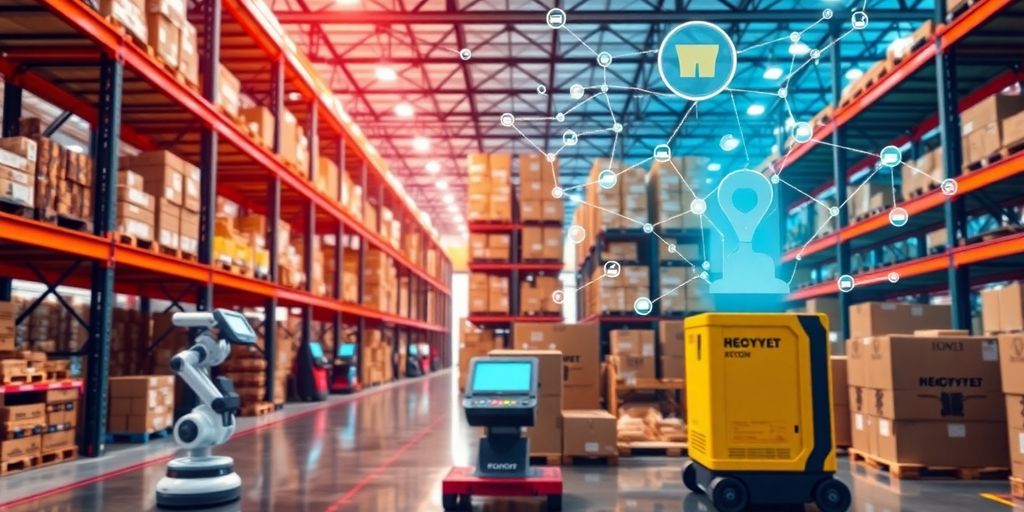
The Internet of Things (IoT) is shaking up supply chain management in some pretty exciting ways. By connecting devices and systems, businesses can streamline their operations, improve efficiency, and respond to challenges more effectively. In this article, we’ll explore a compelling iot supply chain use case that showcases how this technology can transform logistics and supply chain processes for the better.
Key Takeaways
- IoT enhances visibility in supply chains, allowing real-time tracking of shipments and inventory.
- Integrating IoT can significantly lower logistics costs and improve operational efficiency.
- Crowdsourced delivery models using IoT can speed up delivery times and reduce expenses.
- Data gathered from IoT devices helps businesses make informed decisions and anticipate disruptions.
- Challenges like data security and integration with existing systems need careful consideration when adopting IoT solutions.
Benefits of IoT in Supply Chain Management
IoT is changing supply chain management, and for good reason. It's not just about the hype; it's about real, tangible improvements. Let's look at some of the key benefits.
Enhanced Visibility and Transparency
IoT gives you eyes everywhere. Real-time data on inventory, shipment locations, and even the condition of goods becomes available instantly. This level of transparency helps businesses make better decisions and react faster to any disruptions. Think of it as having a constant, up-to-the-minute view of your entire operation. This is especially useful for IoT shipment tracking.
Improved Work Conditions
IoT can make jobs easier and safer for workers. Automating tasks, monitoring environmental conditions, and providing real-time alerts can reduce the risk of accidents and improve overall well-being. For example, sensors can monitor temperature and humidity in warehouses, ensuring a comfortable and safe environment for employees. Plus, automation reduces the need for manual labor in hazardous areas. It's about creating a better, more efficient workplace for everyone.
Proactive Contingency Planning
With IoT, you're not just reacting to problems; you're anticipating them. By collecting and analyzing data from various points in the supply chain, you can identify potential risks and develop contingency plans. This could mean rerouting shipments to avoid delays, adjusting inventory levels to meet changing demand, or even predicting equipment failures before they happen. It's about being prepared for anything and minimizing disruptions. IoT helps with smart supply chain solutions.
IoT enables a more resilient and responsive supply chain. By providing real-time insights and predictive capabilities, businesses can better manage risks, optimize operations, and ultimately deliver greater value to their customers.
The Rise of IoT in Supply Chain Operations
It's interesting to see how quickly IoT is being used in supply chains. I mean, it makes sense, right? Everyone wants things faster and cheaper. IoT seems to be a way to make that happen.
Market Growth and Adoption Rates
IoT is growing fast. Like, really fast. It's not just hype; the numbers show it. More and more companies are using IoT tech in their supply chains. It's becoming the norm, not just something cool to try out. Cloud-based data platforms are up there, but IoT is right behind them. It's a big deal. According to some reports, the world IoT market in logistics is expected to touch $35 billion soon. That's a lot of money floating around. It's clear that IoT adoption is not slowing down anytime soon.
Impact on Logistics Costs
Okay, so here's the thing: IoT can actually save companies money. Who would have thought? By using IoT, companies can cut their logistics costs. I saw a report that said it could be up to 10%. Plus, it can improve how well everything works by like 30%. That's a huge difference. It's like finding money you didn't know you had. It makes you wonder why everyone isn't doing it already. I mean, who doesn't want to save money and be more efficient?
Integration with Advanced Technologies
IoT doesn't work alone. It plays well with other tech. Think AI, machine learning, and even blockchain. These things all work together to make supply chains smarter and faster. It's like building a super team of technology. The more these technologies work together, the better the supply chain runs. It's all about making things as smooth as possible. It's like having a bunch of robots working together to get things done. It's pretty cool when you think about it.
IoT is changing how supply chains work. It's not just about tracking things; it's about making everything smarter and more efficient. It's about using data to make better decisions and save money. It's the future of supply chains, and it's happening now.
Key Use Cases of IoT in Supply Chain Logistics
Okay, so let's talk about where IoT really shines in supply chains. It's not just buzzwords; there are some seriously practical applications that are changing how things get from point A to point B. I mean, think about it – knowing exactly where your stuff is, how it's doing, and what's going on with the trucks moving it all? That's powerful stuff.
Real-time Tracking and Visibility
This is probably the biggest win for IoT in logistics. Imagine being able to see exactly where every single shipment is, at any moment. No more guessing, no more calling around.
- Know where your products are at all times.
- Get alerts about delays before they become a problem.
- Improve customer service by giving accurate delivery estimates.
Real-time data allows companies to react quickly to disruptions and changing conditions, resulting in a more agile and responsive supply chain. It's about having the information you need, when you need it, to make smart decisions.
Fleet Management and Maintenance
It's not just about tracking packages; it's about tracking the vehicles themselves. IoT sensors can monitor everything from engine performance to tire pressure, helping companies keep their fleets running smoothly and avoid costly breakdowns. This is a big deal for smart supply chain solutions.
- Track vehicle location and driver behavior.
- Monitor engine performance and fuel consumption.
- Schedule maintenance proactively to avoid breakdowns.
Cold Chain Monitoring
If you're shipping anything that needs to stay cold – food, medicine, whatever – IoT is a game-changer. Sensors can constantly monitor temperature and humidity, ensuring that products stay within safe limits throughout the journey. This is especially important for IoT in supply chain and logistics.
- Monitor temperature, humidity, and other environmental factors.
- Get alerts if conditions go outside of acceptable ranges.
- Ensure compliance with regulations.
Here's a quick look at the impact:
| Benefit | Description
Innovative Applications of IoT Technology
IoT isn't just about tracking packages anymore; it's evolving into something much bigger. We're seeing some really interesting and innovative uses pop up, pushing the boundaries of what's possible in supply chain management. It's not just about efficiency, but also about creating smarter, more responsive, and even more sustainable supply chains. Let's take a look at some examples.
AI-Driven Automated Procurement
Imagine a world where your supply chain anticipates your needs. That's the promise of AI-driven automated procurement. IoT devices generate a ton of data, and when you feed that data into AI algorithms, you can automate the purchasing process. Think about smart shelves in retail smart shelves that automatically reorder products when stock gets low. It's not just about saving time; it's about minimizing errors and ensuring you always have what you need, when you need it.
- Predictive ordering based on real-time demand
- Automated supplier selection based on performance
- Dynamic pricing adjustments based on market conditions
Crowdsourced Delivery Solutions
Crowdsourced delivery is changing the game, especially for last-mile logistics. IoT plays a big role here, enabling companies to tap into a network of independent drivers and vehicles. It's like Uber, but for packages. This can be a really cost-effective way to handle deliveries, especially in urban areas where traditional delivery methods can be slow and expensive. Plus, it can help reduce emissions by optimizing routes and utilizing underused capacity.
The beauty of crowdsourced delivery is its flexibility. It allows companies to scale their delivery operations up or down based on demand, without having to invest in a large fleet of vehicles or hire a bunch of full-time drivers. It's a win-win for everyone involved.
Supply Chain Analytics and Optimization
IoT devices generate a massive amount of data, and that data is a goldmine for analytics. By analyzing this data, companies can identify bottlenecks, optimize routes, and improve overall supply chain performance. We're talking about things like predictive maintenance for equipment, real-time inventory management, and even demand forecasting. It's all about using data to make smarter decisions and create a more efficient and resilient supply chain. One of the most substantial IoT applications is the real-time tracking and visibility of goods.
| Metric | Before IoT | After IoT | Improvement |
|---|---|---|---|
| Delivery Time | 72 hours | 48 hours | 33% |
| Inventory Costs | $100,000 | $75,000 | 25% |
| Stockouts | 10% | 2% | 80% |
Challenges in Implementing IoT Solutions
Okay, so IoT in supply chains sounds amazing, right? But let's be real, it's not all sunshine and rainbows. There are definitely some hurdles to jump over before you can fully reap the rewards. It's like when I tried to bake a cake from scratch – looked easy on TV, but the reality was a flour-covered disaster. Implementing IoT can feel a bit like that if you're not prepared.
Data Security and Privacy Concerns
This is a big one. With more devices connected, there are more entry points for cyberattacks. Think about it: every sensor, every tracker, is a potential vulnerability. And we're talking about sensitive data here – customer info, shipping routes, product details. If that falls into the wrong hands, you're looking at serious problems. It's not just about protecting your company; it's about protecting your customers too. You need solid cybersecurity measures in place.
Integration with Legacy Systems
Most companies aren't starting from scratch. They've got existing systems – ERP, WMS, you name it. And guess what? These systems weren't designed to play nice with IoT. Getting them to talk to each other can be a major headache. It's like trying to plug a USB-C into an old-school serial port. You might need to invest in middleware, APIs, or even replace some of your old infrastructure. It's not always a simple plug-and-play situation. Seamless integration is essential for maximizing IoT’s full benefits in supply chains and logistics.
Cost of Implementation and Maintenance
Let's talk money. IoT solutions aren't cheap. You've got the initial investment in hardware, software, and network infrastructure. But that's not all. You also need to factor in ongoing maintenance, data storage, and IT support. And don't forget about training your staff to use the new systems. It all adds up. You need to carefully weigh the costs against the potential benefits to make sure it's a worthwhile investment.
It's important to remember that implementing IoT is a journey, not a destination. There will be challenges along the way, but with careful planning and the right approach, you can overcome them and unlock the full potential of IoT in your supply chain.
Future Trends in IoT Supply Chain Solutions
Okay, so what's next for IoT in supply chains? It's not just about tracking packages anymore. We're talking about some serious changes coming down the line. Think smarter, faster, and way more connected.
Increased Automation and AI Integration
Expect to see robots and AI taking over more tasks. It's not just hype; it's about making things run smoother and with fewer errors. We're talking about AI making decisions on the fly, optimizing routes, and even predicting potential problems before they happen. This will lead to a more efficient supply chain management.
- Automated warehouses will become the norm, not the exception.
- AI-powered predictive maintenance will keep equipment running longer and reduce downtime.
- Real-time data analysis will allow for instant adjustments to changing conditions.
Sustainability and Green Logistics
People care about the environment, and that includes how stuff gets from point A to point B. IoT can play a big role in making supply chains more eco-friendly. Think about it: optimized routes mean less fuel consumption, and better monitoring can reduce waste. It's a win-win.
- IoT sensors can monitor emissions and energy usage throughout the supply chain.
- Data-driven insights can help companies identify and eliminate wasteful practices.
- Consumers are increasingly demanding sustainable options, putting pressure on companies to adopt green logistics practices.
Sustainability is no longer a niche concern; it's becoming a core business imperative. Companies that embrace green logistics will gain a competitive edge and attract environmentally conscious customers.
Enhanced Customer Experience
Let's be real, everyone wants their stuff fast and without any hassle. IoT can help make that happen. Real-time tracking, personalized delivery options, and proactive communication can all add up to a better experience for the customer.
- Customers can track their orders in real-time, from the warehouse to their doorstep.
- Personalized delivery options, such as scheduled delivery times and drop-off locations, can improve convenience.
- Proactive communication about potential delays or issues can build trust and loyalty.
Final Thoughts on IoT in Supply Chains
In conclusion, the integration of IoT in supply chains is changing the game for businesses everywhere. By using real-time data and smart technologies, companies can streamline their operations, cut costs, and improve delivery times. This isn't just about tech for tech's sake; it's about making logistics smarter and more efficient. As we move forward, we can expect IoT to play an even bigger role in how goods are moved and managed. The future looks bright for those willing to embrace these innovations, and it’s clear that staying ahead means adapting to these changes. So, whether you're a small business or a large corporation, now is the time to consider how IoT can transform your supply chain.
Frequently Asked Questions
What does IoT stand for in supply chain management?
IoT stands for the Internet of Things. It refers to the network of devices connected to the internet that can collect and share data.
How does IoT improve supply chain visibility?
IoT improves visibility by providing real-time data on inventory levels, shipment locations, and equipment status, helping companies make better decisions.
What are some benefits of using IoT in logistics?
Benefits include faster deliveries, reduced costs, improved working conditions, and better customer satisfaction.
What challenges do companies face when implementing IoT solutions?
Challenges include data security concerns, integrating with older systems, and the costs of setting up and maintaining IoT technology.
How can IoT help with fleet management?
IoT can monitor vehicle conditions, track locations, and optimize routes, which helps reduce costs and improve efficiency.
What are future trends for IoT in supply chains?
Future trends include increased automation, a focus on sustainability, and enhanced customer experiences through better service.
This article was created with support from AI-driven technology, drawing on multiple reputable sources. The final content has been thoroughly reviewed and edited by RORO Technology's editorial team to ensure accuracy, clarity, and coherence. The opinions expressed herein belong solely to the author and do not necessarily represent the official views or positions of RORO Technology. This article is intended for informational purposes only and should not be considered financial or professional advice.