
As businesses increasingly prioritize cybersecurity, finding the right tools to protect their networks is crucial. Vectra AI has gained popularity for its advanced threat detection capabilities, but it may not suit every organization's needs. If you're on the lookout for alternatives, this article outlines some of the top competitors to Vectra AI for 2025. Whether you're looking for specific features, pricing options, or enhanced support, these alternatives might just be what you need to keep your business secure.
Key Takeaways
- There are many Vectra AI competitors that offer similar or even better features.
- Pricing and customer support can vary significantly between alternatives.
- It's important to assess your specific security needs before choosing a platform.
- Many alternatives provide free trials or demos to help you make an informed decision.
- Exploring different options can lead to better integration and functionality for your business.
1. Cloudflare
Cloudflare is a big name in website security, and for good reason. It's like having a bouncer for your website, keeping out the bad guys and making sure everything runs smoothly. I remember when a friend's site got hit with a DDoS attack, and Cloudflare was the only thing that saved them. It's not just about security, though; it also speeds up your site, which is a win-win.
Here's what makes Cloudflare stand out:
- DDoS Protection: Keeps your site online even when under attack.
- CDN: Speeds up your website by caching content closer to your visitors.
- Web Application Firewall (WAF): Protects against common web exploits.
Cloudflare offers a range of plans, including a free option, making it accessible to businesses of all sizes. It's a solid choice if you're looking for a comprehensive security and performance solution. Plus, their interface is pretty easy to use, which is always a bonus.
Cloudflare's website security software is a strong contender in the cybersecurity space. It provides comprehensive protection against various online threats, ensuring your website remains secure and performs optimally. It's definitely worth considering if you're serious about protecting your online presence.
2. AVG AntiVirus Business Edition
Okay, so AVG AntiVirus Business Edition. It's not just for home users anymore. They've got a version aimed squarely at businesses, especially those small to medium-sized setups. It's all about keeping your endpoints safe from the usual suspects: ransomware, malware, and those pesky hacker attacks.
AVG AntiVirus Business Edition is known for its real-time protection and regular updates.
Think of it as your digital security guard, working around the clock. It's designed to be efficient, so it doesn't bog down your systems while it's doing its thing. It's one of the best cloud-based alternatives to Vectra AI Platform.
Here's what it brings to the table:
- Real-Time Outbreak Detection: Uses AI to spot new threats as they emerge. Pretty neat, right?
- Network Antivirus: Makes sure all devices on your network are protected. No weak links allowed.
- File Shredder: Securely deletes files so they can't be recovered. Handy for sensitive data.
AVG AntiVirus Business Edition is a solid choice if you're looking for something that's easy to manage and doesn't break the bank. It might not have all the bells and whistles of some of the enterprise-level solutions, but it gets the job done for most small to medium-sized businesses.
3. ESET Endpoint Security
ESET Endpoint Security is a solid choice if you're looking to beef up your business's cyber defenses. It's known for its multi-layered approach, which mixes traditional antivirus stuff with more advanced techniques, like machine learning. This helps it fight off viruses, malware, and new threats pretty effectively. One cool thing about ESET is that it doesn't hog your system's resources, so you get security without slowing things down. ESET is a highly-rated antivirus solution that offers a user-friendly interface.
ESET provides real-time protection and acts instantly on unidentified malware. It also allows you to easily manage and document vulnerabilities and endpoint security incidents.
Here are some things to consider about ESET Endpoint Security:
- It has Adaptive Threat Protection, which looks at content from your business and decides what to do based on file reputation and rules.
- It offers Web Activity Monitoring, which keeps an eye on web searching and browsing on your systems.
- It allows you to directly contain any compromised endpoint, preventing the spread of threats within.
4. Malwarebytes for Business
Malwarebytes for Business is a cybersecurity solution designed to shield businesses from various digital threats. It's known for its anti-malware engine, which is pretty good at finding and getting rid of malware, ransomware, and other bad software that can mess up business operations. It uses a multi-layered defense, combining different methods to protect your systems.
Here's what makes it stand out:
- Real-time protection: It blocks threats as they happen.
- Ransomware protection: It stops ransomware from encrypting your files.
- Web protection: It blocks access to malicious websites.
Malwarebytes for Business is a solid choice if you need something that's easy to use and doesn't require a ton of technical knowledge. It's not the most advanced solution out there, but it gets the job done for most small to medium-sized businesses. Plus, it won't break the bank. If you're a small business looking for an easy-to-use and cost-effective alternative to Vectra AI Platform, this could be it.
Always check the details to make sure it fits what you need.
5. Splunk Enterprise
Splunk Enterprise is a robust software designed for in-depth data examination and operational awareness. Its main strength is its ability to process and analyze large amounts of machine-generated data, making it suitable for IT operations, security measures, and business analytics. With Splunk, users can easily gather, index, and visualize data in real-time, providing insights into patterns, trends, and potential problems. It's like having a super-powered search engine for all your business data.
Splunk is a tool that should handle volume and adapt to your tech stack and setup perfectly. It should cover as many devices and systems as possible, ensuring coverage across a large area. Even if your business is small, the tool should benefit you in the long run. Cybersecurity plans usually work best when they’re part of a team. They need to join forces with other systems to create a solid security plan without any gaps.
Splunk Enterprise lets you search, analyze, and visualize your data quickly. It's a solid choice if you need to make sense of tons of information and turn it into actionable insights. It's not always the easiest to learn, but the power it gives you is worth the effort.
Here are some reasons why people choose Splunk:
- Real-time data analysis
- Scalability for growing businesses
- Versatile use across different departments
6. ManageEngine Firewall Analyzer
ManageEngine Firewall Analyzer is designed to simplify network security management. It's a tool that helps organizations keep an eye on their firewall logs and traffic, giving them insights into what's happening on their network. It aims to help IT teams quickly spot and deal with potential problems.
Here's what it can do:
- Keeps tabs on network traffic and firewall logs.
- Provides alerts in real-time.
- Helps identify unusual network activity.
ManageEngine Firewall Analyzer is a solid option if you're looking for something to help manage your network's security. It's designed to be user-friendly, which is a plus if you don't want to spend ages figuring out how to use it. It's worth checking out if you need to monitor security policies and analyze network behavior.
The software provides intelligent SOC automation for streamlined security operations.
Some of its features include:
- Comprehensive sensors using AI and advanced analytics to evaluate network activity continuously.
- FortiGuard Anti-Botnet prevents unauthorized communication attempts with compromised remote servers.
- Customer support is known for its quick response to tickets.
7. SentinelOne
SentinelOne is a big name in endpoint protection. It's designed to protect businesses from all sorts of cyber nasties, like malware and ransomware. It uses AI and machine learning to keep an eye on things in real-time.
Think of it like this:
- It's got a brain (AI) that learns and adapts.
- It acts fast to stop threats.
- It covers all your devices.
SentinelOne is a solid choice if you need something that can handle a lot of different threats and keep your systems safe. It's one of the top five competitors in the cybersecurity space for a reason.
8. Hack The Box
Okay, so Hack The Box is a bit different. It's not exactly a direct competitor to Vectra AI in the traditional sense, but it's a platform that can seriously up your cybersecurity game. Think of it as a massive, online cybersecurity training range. It's where you go to sharpen your skills, learn new techniques, and generally become a tougher target.
Hack The Box focuses on hands-on learning through simulated environments. It's less about detecting threats in a live network (like Vectra AI) and more about understanding how those threats work in the first place.
Here's what makes it cool:
- Tons of virtual machines (VMs) to hack, ranging from beginner-friendly to seriously challenging.
- Active community forums where you can get help (or hints) from other users.
- A great way to learn about different attack vectors and defense strategies.
Using Hack The Box is like going to the gym for your cybersecurity skills. You're not just reading about threats; you're actively trying to exploit systems and defend against attacks. This practical experience is invaluable for anyone working in cybersecurity, whether you're a seasoned professional or just starting out. It's a great way to get cybersecurity training and improve your skills.
It's a solid tool for building a security-conscious team, even if it doesn't directly compete with Vectra AI's network detection and response capabilities.
9. Orca Security
Orca Security takes a different approach to cloud security. Instead of relying on agents, it uses what they call SideScanning™ technology. Basically, it looks at your entire cloud environment to find vulnerabilities and misconfigurations. This means you don't have to install anything on individual machines, which can save a lot of time and effort.
Here's what makes Orca Security stand out:
- Comprehensive Visibility: It gives you a broad view of your cloud security posture.
- Agentless Approach: No need to install and manage agents on every instance.
- Prioritized Alerts: It helps you focus on the most critical risks first.
Orca Security aims to simplify cloud security by providing a platform that's easy to deploy and manage. It's designed to help organizations quickly identify and address security issues in their cloud environments. If you're looking for cloud security solution that doesn't require agents, Orca Security is worth considering. It's a good way to get a handle on your cloud security without a lot of overhead.
10. Safetica
Safetica is a data loss prevention (DLP) and insider risk management solution designed to protect sensitive data from theft or accidental loss. It focuses on monitoring and controlling data flow within an organization. I remember when our company had a scare with some sensitive files almost getting leaked. It really highlighted the need for something like Safetica.
- Data Loss Prevention: Safetica helps prevent sensitive data from leaving the company network through various channels like email, USB drives, and cloud storage.
- Insider Threat Detection: It monitors user behavior to identify potential insider threats, such as employees who might be trying to steal or leak data.
- Compliance: Safetica assists organizations in meeting regulatory compliance requirements by providing tools to track and control data handling practices.
Implementing Safetica can be a bit complex, especially when configuring policies to match specific business needs. It's important to plan carefully and involve key stakeholders to ensure a smooth rollout and avoid disrupting legitimate business activities.
Safetica offers a range of features to help organizations protect their data. It's a solid choice if you're looking for a comprehensive DLP solution.
11. PhishingBox
PhishingBox is designed to help organizations defend against phishing attacks. It provides tools to simulate attacks, educate employees, and find weak spots in real time. The interface is easy to use, so it fits right into current security setups.
- Simulated Phishing Campaigns: Run fake phishing emails to see who clicks.
- Employee Training: Teach your team what to look for in suspicious emails.
- Vulnerability Assessments: Find the holes in your security before the bad guys do.
PhishingBox focuses on preventing phishing attacks through simulations and training. It's a proactive way to keep your organization safe.
It's important to note that while PhishingBox offers a strong defense against phishing, it's just one piece of the puzzle. A complete security strategy also needs things like firewall analyzer and endpoint protection.
12. ThreatLocker
ThreatLocker is a security solution that focuses on application control, aiming to prevent unauthorized software from running on your systems. It's like having a bouncer for your computer, only letting in the apps you've approved. This approach can be very effective against ransomware and other malware that relies on exploiting unknown vulnerabilities.
Here's what ThreatLocker brings to the table:
- Application Whitelisting: Only approved applications can run.
- Ringfencing: Limits what approved applications can do.
- Storage Control: Manages access to storage devices.
ThreatLocker's approach to cybersecurity is proactive, focusing on preventing threats before they can execute. This can significantly reduce the attack surface and minimize the risk of successful breaches. It offers real-time visibility and control over applications, helping organizations restrict unauthorized access and secure critical data. For businesses seeking robust network security software, ThreatLocker is worth considering.
It's available at a starting price of $0.01 per user.
13. Falcon
Okay, so Falcon. I've heard some buzz about this one. It's supposed to be a website monitoring software, which, honestly, sounds pretty useful if you're running any kind of online business. I mean, who wants their website to crash and not even know about it?
Falcon aims to keep an eye on your website's uptime, performance, and security.
Here's what I gather it does:
- Keeps tabs on website availability.
- Alerts you to downtime or performance hiccups.
- Tracks website speed and loading times.
Basically, it's like having a digital watchdog for your website. If something goes wrong, you're supposed to be the first to know. I guess that's the idea, anyway. It's one of the AI-powered cybersecurity platforms CrowdStrike Falcon that people are talking about, so it's probably worth a look if you're in the market for this kind of thing.
14. GeeTest CAPTCHA
I've been seeing CAPTCHAs everywhere lately, and it got me thinking about alternatives to the usual Google reCAPTCHA. One that keeps popping up is GeeTest CAPTCHA. It's supposed to be more user-friendly while still doing a solid job at blocking bots. I decided to look into it a bit more.
GeeTest CAPTCHA aims to provide a balance between security and user experience. It uses interactive challenges, which are supposed to be less annoying than typing in distorted text or clicking on traffic lights all day. Here's what I've gathered:
- It uses a slider-based puzzle that's supposedly easier for humans to solve but harder for bots to crack.
- They offer real-time risk assessment to adapt the difficulty of the CAPTCHA based on user behavior.
- It integrates with various web applications, so it should be relatively straightforward to implement.
From what I understand, GeeTest tries to learn from user interactions to improve its bot detection over time. It's an interesting approach, and if it works as advertised, it could be a good option for websites looking to improve their security without frustrating their users.
I've also seen some other options that might be worth checking out if you're looking for alternatives to Google reCAPTCHA, like hCaptcha or Cloudflare Turnstile. It really depends on your specific needs and how much you value user experience versus pure security.
15. Darktrace
Darktrace is a big name in AI-powered cybersecurity. Founded in 2013, they aim to provide complete solutions to stop cyber disruptions. Their main products include PREVENT, DETECT, RESPOND, and HEAL.
Here's a quick rundown:
- They integrate with a ton of other platforms.
- They can spot intrusions and block them.
- They give you details on network activity that's hard to find otherwise.
One thing to keep in mind is that Darktrace can be pricey, which might be a problem for organizations watching their budgets. Also, it can take a while to get used to all its features. But, it can complement tools like SIEM platforms.
Consider FortiNDR by Fortinet as a strong alternative, especially if you're looking for compatibility with different security tools.
16. Cisco SecureX
Cisco SecureX is a cloud-native, integrated security platform that aims to simplify and automate security operations. It's designed to provide broad visibility, enable automation, and strengthen your security posture across your entire digital environment. I remember when I first heard about it, I thought, "Another security platform?" But after digging in, I realized it's more than just a collection of tools; it's about connecting the dots.
- Centralized Visibility: SecureX offers a single pane of glass view of your security landscape, pulling in data from various Cisco and third-party security products. This helps in quickly identifying and responding to threats.
- Automated Workflows: The platform automates common security tasks, such as threat investigation and incident response, freeing up your security team to focus on more strategic initiatives.
- Integrated Threat Intelligence: SecureX incorporates Cisco Talos threat intelligence, providing real-time insights into emerging threats and helping you stay ahead of the curve.
SecureX is like the glue that holds your security ecosystem together. It's not just about having the best individual tools; it's about how well they work together. The platform's ability to correlate data from different sources and automate responses can significantly improve your overall security effectiveness.
It's worth noting that while SecureX aims to be comprehensive, its effectiveness depends heavily on the integration of other security solutions. If you're already heavily invested in Cisco's security ecosystem, SecureX can be a game-changer. However, if you're using a mix of vendors, you'll want to carefully evaluate the level of integration and compatibility. Consider how it compares to other email security platforms on the market.
17. Palo Alto Networks Cortex XDR
Okay, so Palo Alto Networks has this thing called Cortex XDR. It's supposed to be their AI-powered security platform, and it's designed to help security teams spot and deal with complex threats super fast. Basically, it's all about getting ahead of the bad guys. Palo Alto Networks was founded in 2005 by Nir Zuk, and they're based in Santa Clara, California. They've put a lot of money into AI innovation, which is a big deal in cybersecurity these days.
Cortex is actually an umbrella term for a few different components: Cortex XDR itself, the Cortex XDR Agent, and Cortex XSOAR. It pulls in data from all over the place – endpoints, networks, cloud stuff – to give you a really complete picture of what's going on. It's designed to find those sneaky, advanced threats that your regular antivirus software might miss. You can compare Cortex XDR and ESET PROTECT to see which endpoint protection platform is right for you.
Cortex focuses on spotting specific events and behaviors across your network. This helps it identify those hard-to-find threats that might slip past other security tools.
Here's what makes Cortex XDR stand out:
- AI-Driven: It uses AI to analyze data and find threats.
- Broad Coverage: It covers Attack Signal Intelligence across your network, cloud, and endpoints.
- Automation: It automates a lot of the response process, so you can deal with threats faster.
18. Fortinet FortiSIEM
Fortinet FortiSIEM is a security information and event management (SIEM) solution designed to help organizations detect, analyze, and respond to security threats. It's part of Fortinet's broader security fabric, aiming to integrate network and security functions. FortiSIEM collects and correlates security data from various sources across an organization's IT infrastructure.
Here's a quick rundown of what FortiSIEM brings to the table:
- Real-time monitoring: It keeps an eye on your network activity as it happens.
- Log management: It gathers and stores logs from different devices and applications.
- Incident response: It helps you react quickly when something goes wrong.
- Compliance reporting: It generates reports to meet regulatory requirements.
Fortinet's approach involves using AI and advanced analytics to monitor devices, users, files, networks, email, applications, cloud environments, logs, and even dark web activity. This constant monitoring helps in identifying potential cyber threats, followed by correlation, enrichment, analysis, triage, validation, and response actions.
Fortinet provides a FortiGuard Labs threat intelligence feed to keep your firewall updated with the latest attack signatures. It also offers quick customer support. However, some users find the pricing and subscription options a bit inflexible, especially for smaller businesses. FortiSIEM is often compared with other SIEM solutions like Splunk Enterprise and LogRhythm SIEM, so it's worth checking out how it stacks up against the competition.
19. Check Point Infinity
Check Point Infinity is a cybersecurity platform that aims to provide broad protection across networks, cloud environments, endpoints, and mobile devices. It's designed to consolidate security management into a single pane of glass, which sounds great in theory. But does it really work? Let's take a look.
It's supposed to cover a lot of ground, from threat prevention to advanced threat hunting. The idea is to simplify security operations and improve overall visibility. But, like any broad solution, it's important to consider whether it truly excels in all areas or if it's more of a jack-of-all-trades, master of none.
Check Point Infinity aims to provide a unified security architecture, but organizations should carefully evaluate its performance against specialized solutions to ensure it meets their specific needs.
Here are some things to consider:
- Integration Capabilities: How well does it integrate with your existing security tools and infrastructure?
- Scalability: Can it handle the growing demands of your organization?
- Cost: Is it a cost-effective solution compared to other options, especially when considering the total cost of ownership?
For organizations seeking alternatives, it's worth exploring options like Falcon Surface for external attack surface management, or other specialized tools that might offer more focused and potentially more effective protection in certain areas.
20. IBM QRadar

IBM QRadar is a SIEM platform designed to help security teams detect, investigate, and respond to threats across an organization's IT infrastructure. It collects log data, network flow data, and security event information from various sources, then uses analytics to identify suspicious activities and potential security incidents. It's a pretty comprehensive tool, but it can be complex to set up and manage.
- Centralized Log Management: QRadar consolidates logs from different sources, making it easier to search and analyze data.
- Real-time Threat Detection: It uses rules and analytics to identify threats as they occur, helping security teams respond quickly.
- Incident Response: QRadar provides tools for investigating security incidents, including visualizations and reporting.
QRadar is often chosen by larger enterprises that need a robust SIEM solution. However, smaller organizations might find it overwhelming or too expensive. It's worth considering whether the complexity and cost are justified by the level of security you need.
It's a solid choice if you're looking for a powerful SIEM, but be prepared for a learning curve and potentially higher costs. You'll want to make sure you have the resources to manage it effectively.
21. Microsoft Sentinel
Microsoft Sentinel is Microsoft's cloud-native SIEM and SOAR solution. It's designed to help organizations collect, detect, investigate, and respond to security threats. I've heard it's pretty good, especially if you're already deep into the Microsoft ecosystem. It aims to provide a bird's-eye view across your enterprise.
Here's what I think are some key aspects:
- It integrates well with other Microsoft services. This is a big plus if you're already using things like Azure Active Directory or Microsoft Defender. It can pull in data from those sources pretty easily.
- It uses machine learning to help detect threats. This can help you find things that you might miss with traditional rule-based systems. It's supposed to reduce false positives, which is always a good thing.
- It offers automated response capabilities. This means you can set up playbooks to automatically respond to certain types of incidents. This can save you a lot of time and effort.
One thing I've noticed is that people seem to either love it or hate it. Some say it's a game-changer, while others find it complex and difficult to configure. It probably depends on your specific needs and your level of expertise with Microsoft products.
It's worth considering if you're looking for a SIEM/SOAR solution, especially if you're already invested in the Microsoft world. It can help with security operations platform and threat detection.
22. Sophos Intercept X
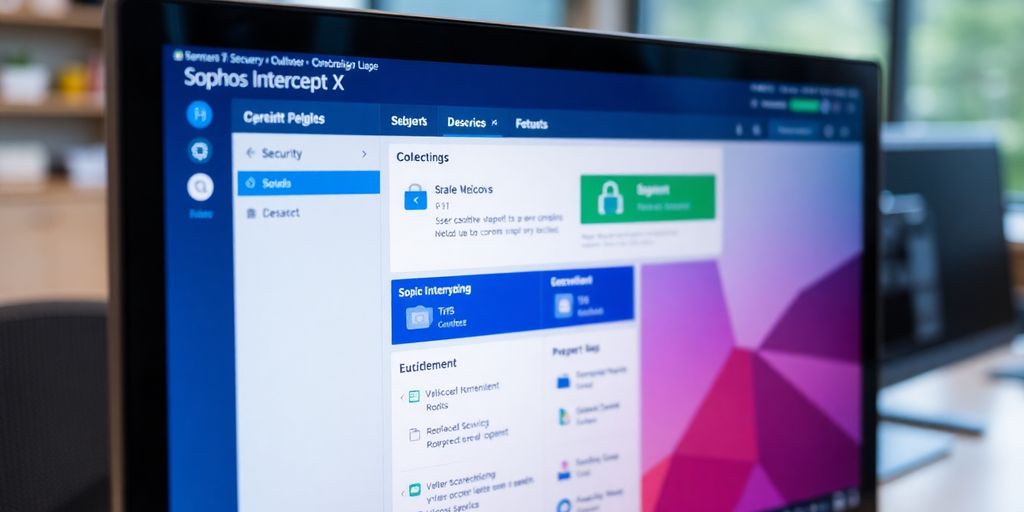
Sophos Intercept X is another big player in the cybersecurity world, and it's often brought up when people are looking for alternatives to Vectra AI. It's designed to protect against a wide range of threats, from malware to ransomware, and it uses a combination of techniques to do so. It's known for its endpoint detection and response (EDR) capabilities, which help organizations quickly identify and respond to security incidents.
Here's a quick rundown of what Sophos Intercept X brings to the table:
- It stops ransomware and prevents it from accessing systems by automatically scanning files when they are accessed.
- It intercepts suspicious communications to prevent potential threats.
- It monitors web searching and browsing activity on client systems.
Sophos Intercept X includes Adaptive Threat Protection, which analyzes content from your enterprise and determines response actions based on file reputation, predefined rules, and reputation thresholds. It also offers the capability to directly contain any compromised endpoint, preventing the spread of threats within.
If you're looking for a Sophos alternative, there are many options to consider.
23. Bitdefender GravityZone
Bitdefender GravityZone is another strong contender in the cybersecurity space. It's designed to provide robust protection for businesses of all sizes. I've heard good things about it, and it seems like a solid alternative to Vectra AI.
Here's what makes it stand out:
- Centralized Management: GravityZone offers a single pane of glass for managing security across your entire infrastructure. This makes it easier to monitor and respond to threats.
- Advanced Threat Prevention: It uses a combination of technologies, including machine learning and behavioral analysis, to detect and block even the most sophisticated attacks. It's good to know that endpoint protection performance is high.
- Endpoint Detection and Response (EDR): GravityZone EDR provides visibility into endpoint activity, allowing you to quickly identify and investigate suspicious behavior.
Bitdefender GravityZone is known for its layered security approach, combining prevention, detection, and response capabilities. This helps organizations stay ahead of evolving threats and minimize the impact of security incidents.
It's worth considering if you're looking for a comprehensive security solution that's easy to manage and provides strong protection against a wide range of threats.
24. Trend Micro Apex One
Trend Micro Apex One is another strong contender in the cybersecurity space, offering a range of features designed to protect your systems. It's worth considering if you're looking for an alternative to Vectra AI. Let's take a look at what it brings to the table.
Here's what makes Trend Micro Apex One stand out:
- Real-time Threat Protection: It ensures real-time protection and instantly acts on unidentified malware.
- Web Activity Monitoring: Keeps an eye on web searching and browsing activity on client systems.
- Adaptive Threat Protection: Analyzes content from your enterprise and determines response actions based on file reputation, predefined rules, and reputation thresholds.
Trend Micro Apex One focuses on threat prevention, detection, and response within a single agent. It aims to simplify security operations while providing robust protection against a wide array of threats.
When comparing Trend Vision One Endpoint Security to other solutions, it's important to consider the specific needs of your organization. While CrowdStrike offers exceptional Endpoint Detection and Response (EDR) capabilities, along with fast response from the managed SOC, integration with other products in the market may be somewhat complex.
25. CrowdStrike Falcon and more
CrowdStrike Falcon is a big name in cybersecurity, and for good reason. Founded in 2011, they've built a reputation around their AI-driven approach to threat detection and response. Their platform is designed to protect endpoints, offer threat intelligence, and handle incident response, among other things.
So, what makes CrowdStrike stand out?
- Exceptional Endpoint Detection and Response (EDR) capabilities.
- Real-time protection against malware.
- AI-native defense trained on extensive security data.
One thing to keep in mind is that all those features can be a bit overwhelming. It might take some time to really understand how to use everything effectively. Also, integrating CrowdStrike with other security tools can sometimes be tricky.
CrowdStrike's endpoint security market is pretty solid, but it's always good to know what else is out there. For example, Palo Alto Networks offers unified security solutions that might be a better fit if you're dealing with complex IT setups or need to comply with strict regulations. Ultimately, the best choice depends on your specific needs and environment. They also offer fast response from the managed SOC. Process chains allow in-depth threat hunting and incident response with root cause analysis. CrowdStrike's ML models are trained on the company’s extensive intelligence and security expertise. It enables the detection of advanced threats while minimizing false positives. Provides automated threat detection and response capabilities. Provides excellent visibility, and malware can be analyzed using Hybrid Analysis. Validating alerts can consume valuable time and resources, potentially delaying incident response and resolution.
Wrapping It Up
In conclusion, while Vectra AI is a solid choice for many businesses, it’s clear that there are plenty of alternatives out there that might suit your needs better. Whether you’re looking for something more affordable, easier to use, or with features that fit your specific requirements, the options we discussed can help you find the right fit. Remember, the best tool is the one that aligns with your business goals and offers the support you need. So take your time, explore these alternatives, and choose wisely for 2025.
Frequently Asked Questions
What are some good alternatives to Vectra AI Platform?
Some great alternatives include Cloudflare, AVG AntiVirus Business Edition, ESET Endpoint Security, and Malwarebytes for Business. These options provide similar features and might be better suited for your needs.
Why should I look for alternatives to Vectra AI Platform?
You might want to consider other options because of cost, missing features, or if you need better support. Finding the right software is important for your business.
Are there any free alternatives to Vectra AI Platform?
Yes, there are free trials available for some options like ESET Endpoint Security and SentinelOne. These can be great for small businesses that need to save money.
Do alternatives to Vectra AI Platform have mobile apps?
Yes, many alternatives, such as ESET Endpoint Security and Malwarebytes for Business, offer mobile apps. This lets you manage tasks and stay connected on the go.
Are there open-source alternatives to Vectra AI Platform?
Yes, there are open-source options like AVG AntiVirus Business Edition. These can be good for businesses that want more control and customization.
What makes Vectra AI Platform different from its competitors?
Vectra AI uses advanced artificial intelligence to find and stop cyber threats. This unique technology helps it detect issues that other tools might miss.
This article was created with support from AI-driven technology, drawing on multiple reputable sources. The final content has been thoroughly reviewed and edited by RORO Technology's editorial team to ensure accuracy, clarity, and coherence. The opinions expressed herein belong solely to the author and do not necessarily represent the official views or positions of RORO Technology. This article is intended for informational purposes only and should not be considered financial or professional advice.