
In the evolving landscape of technology, understanding the difference between centralized and decentralized systems is more important than ever. As we move into 2025, organizations are increasingly faced with the choice between these two models, each with its own set of strengths and weaknesses. This guide aims to break down the key aspects of centralized vs decentralized systems, helping you make informed decisions for your business or project.
Key Takeaways
-
Centralized systems offer streamlined decision-making and easier management.
-
Decentralized systems provide flexibility and local control for specific needs.
-
Each model has unique advantages, such as cost efficiency in centralized systems and resilience in decentralized ones.
-
Challenges exist for both systems, including risks of failure in centralized setups and coordination issues in decentralized ones.
-
Use cases vary widely, with centralized systems common in banking and government, while decentralized models shine in tech like blockchain.
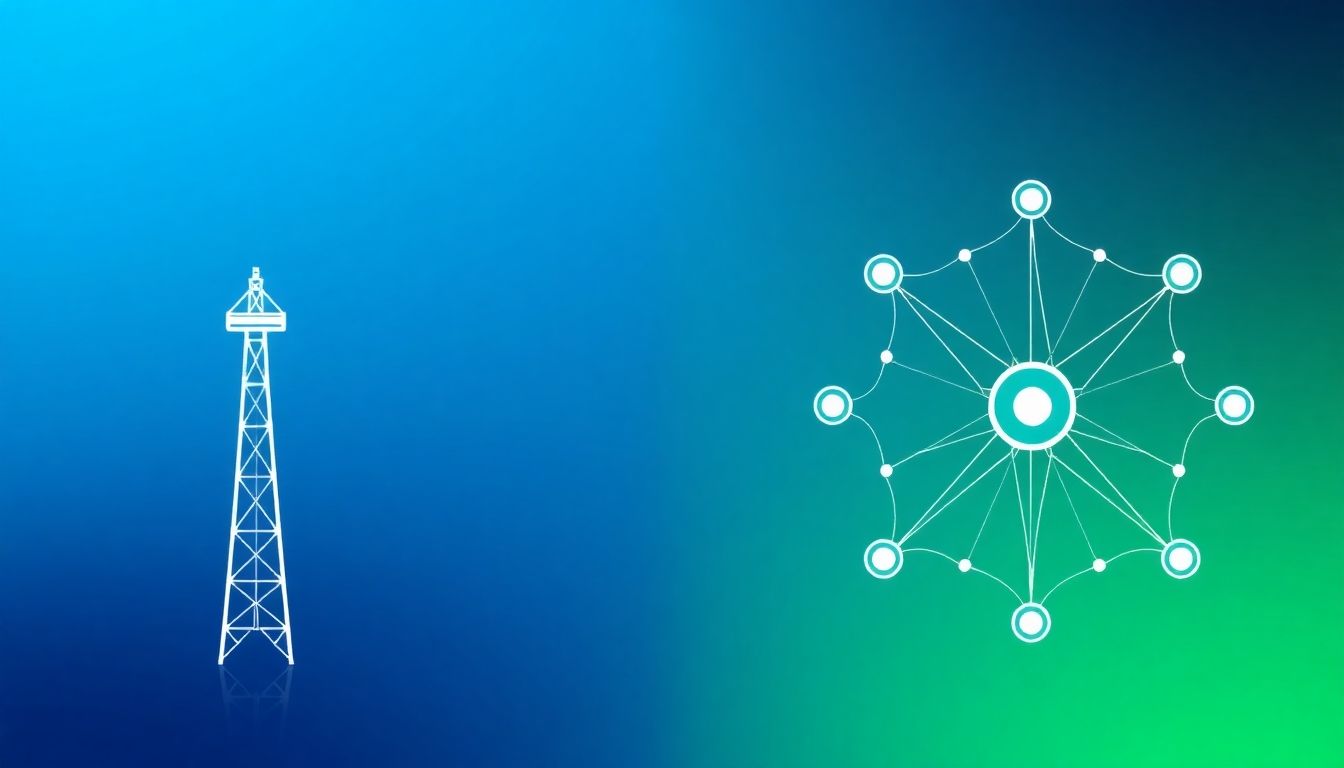
Defining Centralized And Decentralized Systems
Key Characteristics of Centralized Systems
Okay, so let's talk about centralized systems. Think of it like a traditional company structure. There's a head honcho (or a central server) making all the decisions. Everything flows through this central point. It's like a well-oiled machine, usually pretty efficient, but with some potential drawbacks.
-
Single point of control: One entity manages everything.
-
Hierarchical structure: Clear lines of authority and communication.
-
Centralized data storage: All information is kept in one place.
Centralized systems are often favored when standardization and tight control are needed. They can be easier to manage and secure, but they also come with the risk of a single point of failure. If that central point goes down, the whole system can grind to a halt.
Key Characteristics of Decentralized Systems
Now, let's flip the script and look at decentralized systems. Imagine a network where everyone has a say and can operate independently. Think of it like a bunch of friends running a lemonade stand together – no single boss, just everyone doing their part. It can be a bit chaotic, but also super resilient. Decentralized finance DeFi for short is a good example.
-
Distributed control: No single point of authority.
-
Peer-to-peer communication: Direct interaction between participants.
-
Distributed data storage: Information is spread across the network.
Comparative Overview of Both Models
So, what's the real difference? Centralized systems are all about control and efficiency, while decentralized systems prioritize autonomy and resilience. It's like comparing a monarchy to a democracy. One is super organized, the other is more about individual freedom. Choosing between them depends on what you value most. For example, centralized identity management is different than decentralized. Here's a quick rundown:
-
Control: Centralized systems offer more control, while decentralized systems distribute it.
-
Security: Centralized systems can be easier to secure, but also present a single point of failure. Decentralized systems are more resilient but can be harder to secure.
-
Efficiency: Centralized systems are generally more efficient for routine tasks. Decentralized systems can be slower but more adaptable. It's important to assess the current IT infrastructure to determine the best approach.
Advantages Of Centralized Systems
Streamlined Decision-Making
Centralized systems often lead to quicker and more efficient decision-making processes. When authority rests in a single point, decisions can be made rapidly without the need for extensive consultation or consensus-building. This is especially useful in situations that demand quick action. Think of it like this: instead of a bunch of cooks in the kitchen, you've got one head chef calling the shots. It's not always the best for everyone's feelings, but it sure gets things moving. This can translate to a real competitive edge, especially in fast-paced industries.
Enhanced Security Protocols
Security is a big deal, and centralized systems often have an edge here. It's easier to implement and enforce security policies when everything is managed from one place. Consider these points:
-
Unified Security: A single security team can oversee all aspects of security, ensuring consistent protection. This is especially important for platforms that rely on interactive web applications.
-
Easier Monitoring: Centralized monitoring systems can quickly detect and respond to threats.
-
Consistent Updates: Security patches and updates can be deployed across the entire system simultaneously.
Centralized security allows for a more controlled environment, reducing the risk of vulnerabilities that can arise in more distributed setups. It's like having one really strong lock on the front door instead of a bunch of flimsy ones on every window.
Cost Efficiency and Resource Management
Centralization can lead to significant cost savings. By consolidating resources and infrastructure, organizations can avoid duplication and waste. Here's how:
-
Reduced Infrastructure Costs: Fewer servers, less office space, and lower utility bills.
-
Simplified Management: A smaller IT team can manage the entire system, reducing labor costs.
-
Better Purchasing Power: Centralized purchasing can lead to better deals on software and hardware.
It's all about economies of scale. When you buy in bulk and manage everything from one place, you can often get things done cheaper. Plus, you're not paying for the same thing multiple times in different departments. It's just more efficient, plain and simple. This can free up resources to invest in other areas of the business.
Advantages Of Decentralized Systems

Decentralized systems are gaining traction, and for good reason. They bring a different set of strengths to the table compared to their centralized counterparts. It's not about one being universally better, but about understanding where each shines. Decentralization can offer significant advantages in specific scenarios.
Increased Flexibility and Autonomy
One of the biggest draws of decentralized systems is the increased flexibility and autonomy they provide. Instead of relying on a central authority for every decision, individual nodes or participants have more control. This can lead to:
-
Faster adaptation to changing circumstances.
-
Greater innovation as different nodes experiment with new approaches.
-
Reduced dependence on a single entity, making the system more resilient.
Localized Decision-Making
Decentralized systems empower localized decision-making. This means decisions are made closer to the source of the problem or opportunity, leading to more relevant and effective solutions. Think of it like this: instead of a corporate headquarters dictating how a local branch should handle a specific customer issue, the branch itself has the authority to resolve it. This can result in:
-
Improved responsiveness to local needs.
-
Increased efficiency as decisions don't have to go through layers of bureaucracy.
-
Greater ownership and accountability at the local level.
Resilience Against Failures
This is a big one. Decentralized systems are inherently more resilient to failures. Because there's no single point of failure, if one node goes down, the rest of the system can continue to operate. This is in stark contrast to centralized systems, where a failure at the center can bring everything to a halt. This resilience is achieved through:
-
Redundancy: Data and functionality are often replicated across multiple nodes.
-
Distribution: The system is spread out, making it harder to attack or disrupt.
-
Fault tolerance: The system is designed to withstand failures without collapsing. For example, blockchain in healthcare can improve data security.
Decentralized systems offer a compelling alternative to centralized models, particularly in situations where flexibility, autonomy, and resilience are paramount. The ability to distribute decision-making and avoid single points of failure can be a game-changer for many organizations and applications.
Challenges In Centralized Systems
Centralized systems, while offering numerous advantages, aren't without their drawbacks. They can face significant hurdles that impact their effectiveness and long-term viability. It's important to consider these challenges when deciding whether a centralized approach is right for a particular situation. The concentration of power and resources can create vulnerabilities and inefficiencies.
Single Point of Failure Risks
One of the biggest worries with centralized systems is the single point of failure. If the central server, authority, or infrastructure goes down, the entire system can grind to a halt. Think of it like this:
-
A power outage at the main data center could knock out services for thousands of users.
-
A cyberattack targeting the central database could compromise sensitive information.
-
A natural disaster affecting the headquarters could disrupt operations across the entire organization.
This vulnerability makes centralized systems susceptible to disruptions and data loss, requiring robust backup and disaster recovery plans.
Scalability Issues
While centralization can streamline operations initially, scaling up to meet growing demands can become a headache. The central infrastructure might struggle to handle increased traffic, data volume, or user activity. This can lead to:
-
Slower response times and performance bottlenecks.
-
The need for expensive hardware upgrades and infrastructure improvements.
-
Difficulty adapting to sudden spikes in demand.
Resistance to Change
Implementing changes in a centralized system can be a slow and complex process. Because decisions are made at the top, it can be hard to get buy-in from different departments or teams. This can lead to:
-
Delays in adopting new technologies or processes.
-
Frustration among users who feel their needs aren't being met.
-
A rigid and inflexible system that struggles to adapt to changing market conditions. For example, centralized identity management can become difficult to manage as the organization grows.
Challenges In Decentralized Systems
Decentralized systems, while offering numerous advantages, aren't without their own set of hurdles. It's important to understand these challenges to effectively implement and manage such systems. Let's take a look at some of the main issues.
Complexity in Coordination
One of the biggest challenges is simply keeping everyone on the same page. Without a central authority, coordinating efforts across a decentralized network can become incredibly complex. Think about it – you're relying on individual nodes or participants to act in a way that benefits the whole system, but there's no one directly telling them what to do. This can lead to:
-
Communication breakdowns: Getting information to everyone quickly and accurately is tough.
-
Conflicting priorities: Different participants might have different goals, leading to disagreements.
-
Slower decision-making: Reaching a consensus can take a lot longer when you need to get everyone's input.
Inconsistent Standards
Another issue is the lack of uniform standards. In a centralized system, you have a single entity setting the rules. But in a decentralized environment, things can get messy. This can manifest as:
-
Data format variations: Different parts of the system might store data in different ways, making it hard to share and analyze. Standardizing data storage is key.
-
Security protocol discrepancies: Some nodes might have stronger security than others, creating vulnerabilities.
-
Operational inconsistencies: How things are done can vary widely, leading to errors and inefficiencies.
Higher Initial Costs
While decentralized systems can offer long-term cost savings, getting them off the ground can be expensive. This is often due to:
-
Technology investment: Setting up the infrastructure for a decentralized network often requires specialized hardware and software.
-
Development expenses: Building decentralized applications and protocols can be complex and require skilled developers.
-
Education and training: Participants need to understand how the system works and how to use it effectively. This requires investment in training programs.
Decentralized systems present unique challenges that need careful consideration. While the benefits of autonomy and resilience are attractive, the complexities of coordination, inconsistent standards, and higher initial costs can be significant obstacles. Overcoming these challenges requires careful planning, robust communication, and a commitment to collaboration among all participants.
Use Cases For Centralized Systems
Centralized Governance and Command Control
Centralized systems really shine when you need quick, top-down decisions. Think about it: one authority, one set of rules. No endless debates or committees. This is super useful in situations where time is of the essence.
-
Emergency response situations, where a central command can coordinate resources efficiently.
-
Large-scale project management, where a single project manager can keep everything on track.
-
Policy implementation across a large organization, ensuring everyone is on the same page.
Centralized systems are great for maintaining control and consistency. They make it easier to enforce standards and regulations, which can be a big plus in highly regulated industries.
Unified Security Oversight
Security is a big deal, and centralized systems often have an edge here. It's easier to implement and maintain security measures when everything is controlled from one place. You can think of it like having one really strong lock on the front door, rather than a bunch of flimsy ones on every window. This is why cybersecurity is often centralized.
-
Consistent security updates and patches across all systems.
-
Centralized monitoring and threat detection.
-
Easier enforcement of security policies and procedures.
Shared Infrastructure and Operational Savings
Centralized systems can save money in the long run. By pooling resources and standardizing processes, organizations can avoid duplication and waste. Plus, it's often cheaper to manage one large system than a bunch of smaller ones. Think of it like buying in bulk – you get a better deal.
-
Reduced IT infrastructure costs through shared resources.
-
Lower administrative overhead due to standardized processes.
-
Better negotiation power with vendors due to larger purchasing volumes.
Use Cases For Decentralized Systems
Decentralized systems are popping up everywhere, offering alternatives to traditional setups. They're not just theoretical; they're being used in some pretty interesting ways right now. Let's look at some examples.
Blockchain Technology
Blockchain is probably the most well-known use case. It's basically a digital ledger that's distributed across many computers. This makes it super secure and transparent. Think about it – no single point of failure, and everyone can see what's going on. It's being used for all sorts of things:
-
Supply chain management: Tracking products from origin to consumer.
-
Healthcare: Securely storing and sharing medical records.
-
Voting systems: Making elections more transparent and secure.
Blockchain's ability to create trust in a trustless environment is a game-changer. It's not just about cryptocurrency; it's about changing how we think about data and security.
Decentralized Finance (DeFi)
DeFi is trying to recreate traditional financial services – lending, borrowing, trading – but without the banks. It uses smart contracts on blockchains to automate these processes. It's still early days, but the potential is huge. One of the key benefits of decentralized financial system is that it can be more accessible to people who don't have access to traditional banking services.
-
Decentralized exchanges (DEXs): Trade crypto without a central authority.
-
Lending platforms: Borrow and lend crypto assets.
-
Stablecoins: Cryptocurrencies pegged to a stable asset like the US dollar.
Peer-to-Peer Networks
Peer-to-peer (P2P) networks have been around for a while, but they're still a great example of decentralization. Instead of relying on a central server, users connect directly to each other to share resources. Think file sharing, but also things like:
-
Decentralized social media: Platforms where users control their own data.
-
Mesh networks: Creating internet access in areas with limited infrastructure.
-
Distributed computing: Pooling resources to solve complex problems.
Future Trends In Centralized And Decentralized Systems
Emerging Technologies Impact
We're seeing some interesting stuff happen as new tech hits both centralized and decentralized systems. Think about AI and machine learning – they're changing how decisions are made, how data is analyzed, and how systems are secured. For example, AI can help optimize centralized networks by predicting traffic and allocating resources more efficiently. On the decentralized side, AI could automate smart contract execution or improve governance mechanisms. It's not all sunshine and roses, though. We need to consider the ethical implications and potential biases that these technologies might bring.
-
AI-driven automation in centralized data centers.
-
Machine learning for fraud detection in decentralized finance.
-
Blockchain-based identity management systems.
The convergence of AI and blockchain is creating new opportunities, but also new challenges. We need to develop frameworks that ensure these technologies are used responsibly and ethically.
Regulatory Considerations
Regulation is the big question mark hanging over both centralized and decentralized systems. Governments worldwide are trying to figure out how to deal with things like cryptocurrency, data privacy, and cybersecurity. For centralized systems, this might mean stricter compliance requirements and audits. For decentralized systems, it's about figuring out how existing laws apply to new technologies like DeFi insurance and DAOs. It's a constantly moving target, and businesses need to stay informed to avoid getting caught on the wrong side of the law. The regulatory landscape will significantly shape the future of both centralized and decentralized systems.
Shifts in Consumer Preferences
What people want and expect is changing, and that's influencing the direction of both types of systems. Consumers are increasingly concerned about data privacy, security, and transparency. They want more control over their information and more say in how services are delivered. This is driving demand for decentralized solutions that offer greater autonomy and control. At the same time, many consumers still value the convenience and reliability of centralized services. It's about finding the right balance between these competing needs. Here are some trends:
-
Growing demand for privacy-focused technologies.
-
Increased interest in decentralized social media platforms.
-
Preference for personalized and transparent services.
Final Thoughts on Centralized and Decentralized Systems
In wrapping up, understanding the differences between centralized and decentralized systems is key for anyone looking to make informed decisions in 2025. Each approach has its own set of advantages and challenges. Centralized systems can offer better control and consistency, which is great for larger organizations. On the flip side, decentralized systems provide flexibility and local responsiveness, which can be a game-changer for smaller teams or specific markets. Ultimately, the choice depends on your unique needs and goals. So, take the time to weigh your options carefully. The right system can make all the difference in how effectively you operate and adapt in an ever-changing landscape.
Frequently Asked Questions
What is a centralized system?
A centralized system is one where all the control and decision-making happens in one main location or by one main authority. This means that everything is managed in one place.
What is a decentralized system?
A decentralized system is when control and decision-making are spread out across different locations or groups. This allows for more independence and local control.
What are the main benefits of centralized systems?
Centralized systems often have quicker decision-making, better security, and can save money by managing resources in one place.
What are the main benefits of decentralized systems?
Decentralized systems provide more flexibility, allow local teams to make decisions, and can be more resilient to problems since there's no single point of failure.
What challenges do centralized systems face?
Centralized systems can have risks like being a single point of failure, struggle with growing too large, and may face pushback when changes are needed.
What challenges do decentralized systems face?
Decentralized systems can be harder to coordinate, may have different standards across groups, and can cost more to set up initially.
This article was created with support from AI-driven technology, drawing on multiple reputable sources. The final content has been thoroughly reviewed and edited by RORO Technology's editorial team to ensure accuracy, clarity, and coherence. The opinions expressed herein belong solely to the author and do not necessarily represent the official views or positions of RORO Technology. This article is intended for informational purposes only and should not be considered financial or professional advice.
Keep Reading
